Strava for Walking: 5 Apps That Actually Turn Walking Into a Social Event
Strava is the gold standard for social fitness if you run or cycle. For everyone else, it's a leaderboard you're not really on.
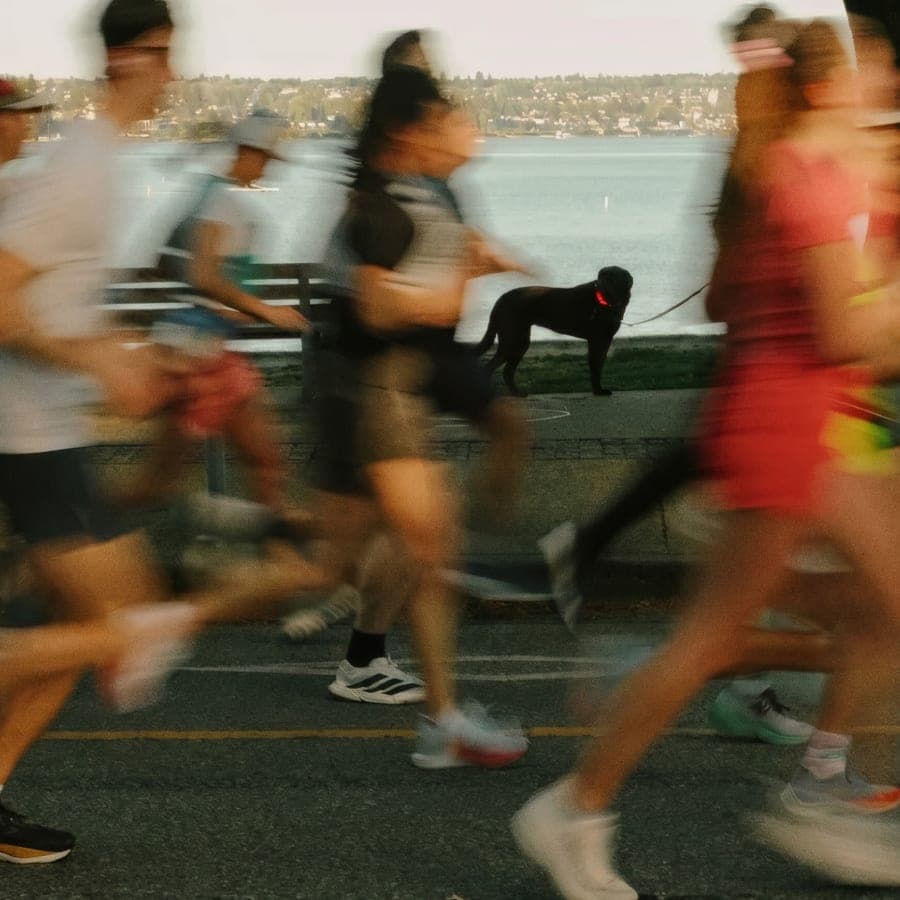
There's a specific feeling Strava gives walkers: you're technically allowed to be there, but the product wasn't made for you.
Segment leaderboards reward pace. The activity feed is full of 20-mile runs and century rides. Your 7,000-step Tuesday doesn't generate a notification for anyone. You can log the walk, sure. But logging isn't the same as belonging to something.
This matters because walking is not a consolation prize for people who can't run. It's a distinct habit with distinct social dynamics. Walkers aren't trying to shave 30 seconds off a mile split — they're trying to stay consistent, stay accountable, and occasionally beat someone they know. The apps built around running metrics don't serve that. Here are five that do.
1. GFN (Global Fitness Network)
GFN is the most competitive walking app that currently exists, and it's competitive in a way Strava isn't — not against your past self, but against other people, right now, in your city.
The core mechanic is an Average Daily Steps metric: your rolling 14-day step average, recalculated daily. This becomes your rank number across five leaderboard layers — friends, your club, your city, your country, and a global table. One good walking day doesn't inflate your position. One lazy week doesn't collapse it. The number reflects how you actually live, and it sits next to everyone else's number in plain sight.
What makes it feel different from a generic step counter with a leaderboard bolted on is the city mechanic. Cities go live when enough local users join, turning "your city is active" into an actual event. There's a City Founder — one person who triggers a city's activation — whose name is permanently pinned to that city's leaderboard. That kind of permanence is unusual in apps that usually treat every record as temporary.
It reads step data from Apple HealthKit or Google Health Connect, so no wearable required.
Best for: people who want genuine competitive pressure, not just a personal dashboard.
Download it here: https://www.gfnleague.com
2. Pacer
Pacer has been the closest thing to a walking-native social app for years, which says something about how little competition it's had.
The group walking challenges are the strongest feature — you can create a private group with friends or colleagues, set a collective step target, and track progress together over a set period. The accountability is real in a way that solo challenges aren't: when the group dashboard shows you've contributed less than everyone else, you feel it.
The app also has a reasonable community layer with public groups organized around goals (weight loss, senior fitness, step streaks), though the discovery is noisy and the quality varies significantly. The paid tier gates some of the more useful features — the free version is functional but visibly limited.
The interface is dated compared to newer apps. It prioritizes information density over design, which some users prefer and others find overwhelming. But the underlying social mechanics work, and the group challenge format is genuinely motivating.
Best for: structured group challenges, especially for workplaces or friend groups with a defined goal.
Download it here: https://www.mypacer.com
3. MapMyWalk
MapMyWalk's strongest feature is something Strava actually does well too, but only rewards runners for: route-based social connection.
When you log a walk on a specific route, you join everyone else who has walked that route. You can see their times, their notes, their frequency. For urban walkers who have regular routes — a lunch loop, a morning park circuit — this creates a quiet, passive sense of community with the strangers who share it.
The friends feed is functional without being compelling. You see friends' activities, can give kudos, can comment. It doesn't create the same pull as a leaderboard or a live challenge, but for people who find leaderboards stressful and just want ambient social awareness of people they know staying active, it's enough.
The Under Armour acquisition introduced some nutritional and training features that feel out of place for a walking app. They're easy to ignore, but they signal that the product's focus has drifted.
Best for: route-focused walkers who care about place as much as stats.
Download it here: https://www.mapmywalk.com
4. AllTrails
AllTrails is not a step-counting app and shouldn't be treated as one. But if your version of walking involves trails, parks, or any walk where the destination matters as much as the distance, its social layer is genuinely useful.
Reviews, photos, and condition updates from other walkers on specific trails create a kind of community around place. Finding a route and seeing that 200 people walked it last weekend and three of them posted photos from the viewpoint is socially motivating in a different way than a leaderboard — it makes you want to be part of that specific experience.
The Lists feature, where users can create and share collections of routes, has become an underrated social mechanic. Following someone whose taste in trails you trust and working through their list is a form of social walking motivation that no other app on this list offers.
Best for: anyone for whom the walk itself — where it goes, what it passes — is the point.
Download it here: https://www.alltrails.com
5. Charity Miles
Charity Miles works on a different motivational axis than every other app here: your steps generate a small charitable donation from a pool of corporate sponsors.
This sounds minor until you try it in a group. When your office wellness challenge is tied to a charity that someone in the group cares about, the social pressure to show up changes character. It's not about beating people — it's about not being the person who let the total down. That's a real and distinct motivation that leaderboard apps can't replicate.
The donation amounts are small (fractions of a cent per step), and the app is transparent about this. It's not a philanthropy platform. But as a reframe for people who find competition off-putting and need a different reason to walk more, it works.
The social features are minimal — team totals, basic leaderboards — but the core mechanic is strong enough to carry group challenges on its own.
Best for: group challenges where competition feels wrong but collective purpose feels right.
Download it here: https://charitymiles.org
What Strava got right that this list hasn't fully solved
Strava's real achievement wasn't the GPS tracking or the segments. It was making fitness feel like something that happened in public — where people you respected could see what you were doing, and where showing up consistently built a kind of reputation.
Walking apps haven't fully cracked that yet. Pacer's groups are functional but not beautiful. MapMyWalk's feed doesn't create the same pull. GFN is the most direct attempt to build that public, competitive layer specifically for walking, but it's new.
The honest answer is that the Strava equivalent for walkers doesn't fully exist yet. These five apps each solve part of the problem. Which one fits depends on whether you want competition, community, routes, purpose, or accountability — and most people, if they're honest, want some combination of all five.